Robotic Camera Head (images in space and time)
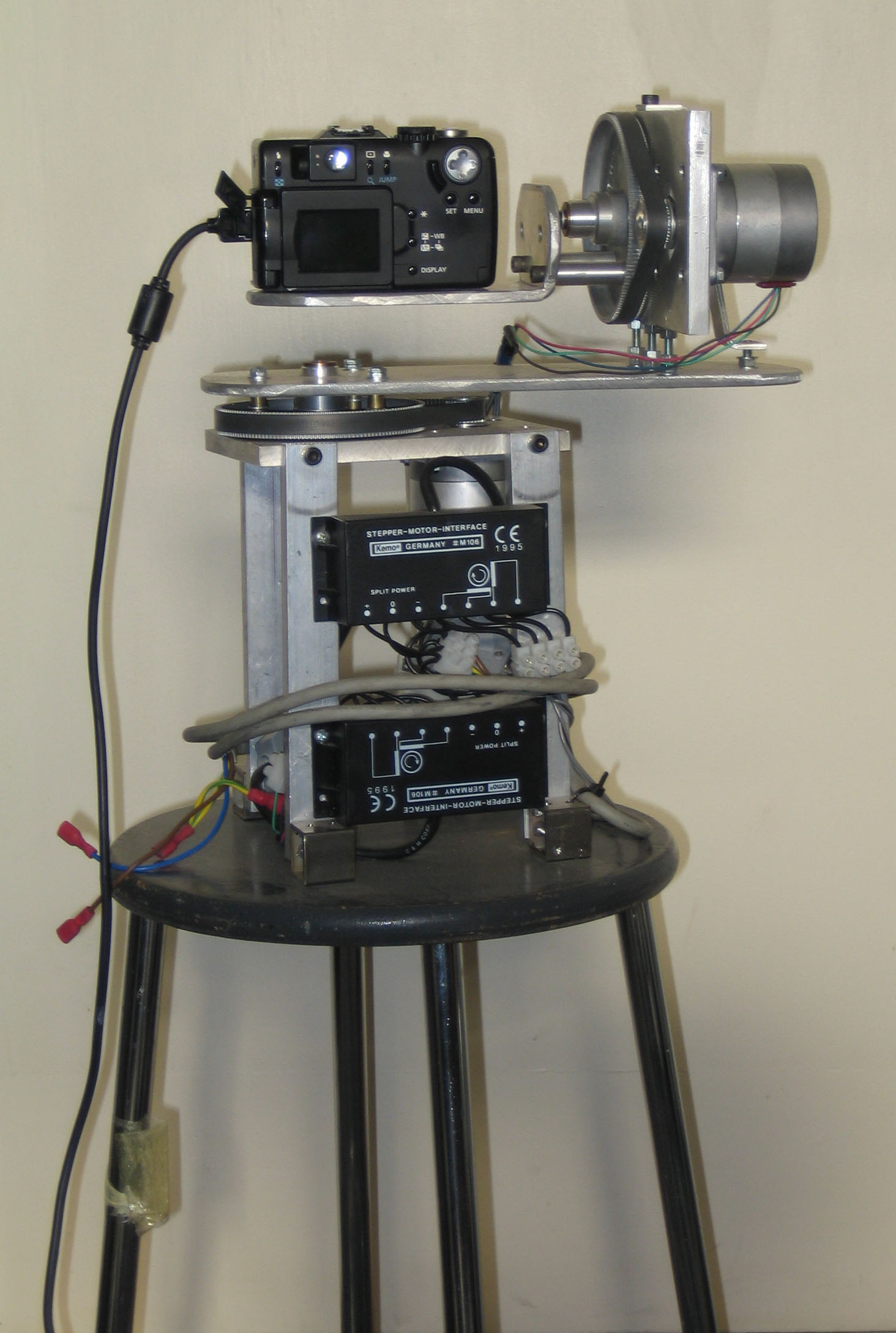
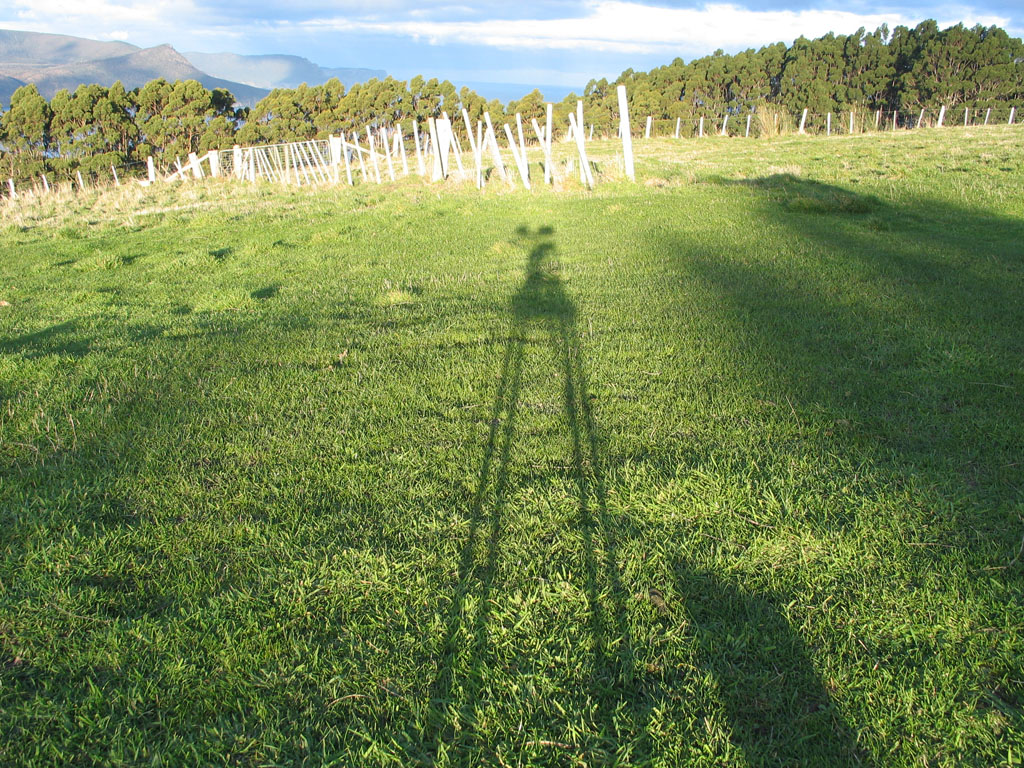 There was a (ex) sculpture student at school, Greg Bourke, who liked tinkering with electronics and mechanical objects, but wasn’t much into computers or code. I had some old tektronix thermal wax printers from the early 90’s due for the skip, with some good quality components. One day while chatting about stepper motors (as you do) we discussed building a computer controlled camera head. Two years latter and it finally got built using the stepper motors and other stuff from the printers, plus a couple of Kemo M106 stepper motor controllers from jaycar. The controllers had a parrallel port interface so had to be driven by a pc. After a bit of stuffing around trying to write our own software, we ended up using the Kemo software, plus some automatic “keypress” software to automate it a bit more. I found because of vibration from the stepper motors I had to use a very clean powersource, in the end I used motorcycle batteries. Because I wanted to use it “in the field”, I wound up using a windows laptop to control the stepper motors and a mac laptop to control the camera (via Canon Remote Capture with my Canon G1 camera). Maximum operation time was 1.5 hrs, taking an image every 15 seconds and with all the gear pretty heavy to lug around. I did do a test field trip, but found after running for some time that there were problems with keeping the camera shutter synchronised with the stepper motors, and some slipage of the motors. I did it by stepping up a grid of say 5 x 3 shots, where the stepper motor would move so many steps in one direction, wait 10 seconds for the camera, then move on. At the end of the row of 5 shots, the other motor would move upwards and it would pan back across.
My initial thoughts for using it were to try some projects creating large zoomable/timebased images made from tiles of images. Another idea was for a panoramic timebased projection system, stitching the images from a panorama and then turning the panorama into an anulus by projecting it onto a cone in a 3D program. The anulus could then be projected by video projector onto a mirrored cone to create an (inside out) projection onto a clyindrical screen.
I was looking for some system to automate tiling the images together and came across the hugin project. The automation process didn’t go to well, as my overlap was insufficient (hugin has come a long way since then though). I dropped this project after that, it didn’t really fit in with my topic (which I could have changed) or my other work which in the end I was more interested in. One day I’ll get back to it.